Inkling Pubs

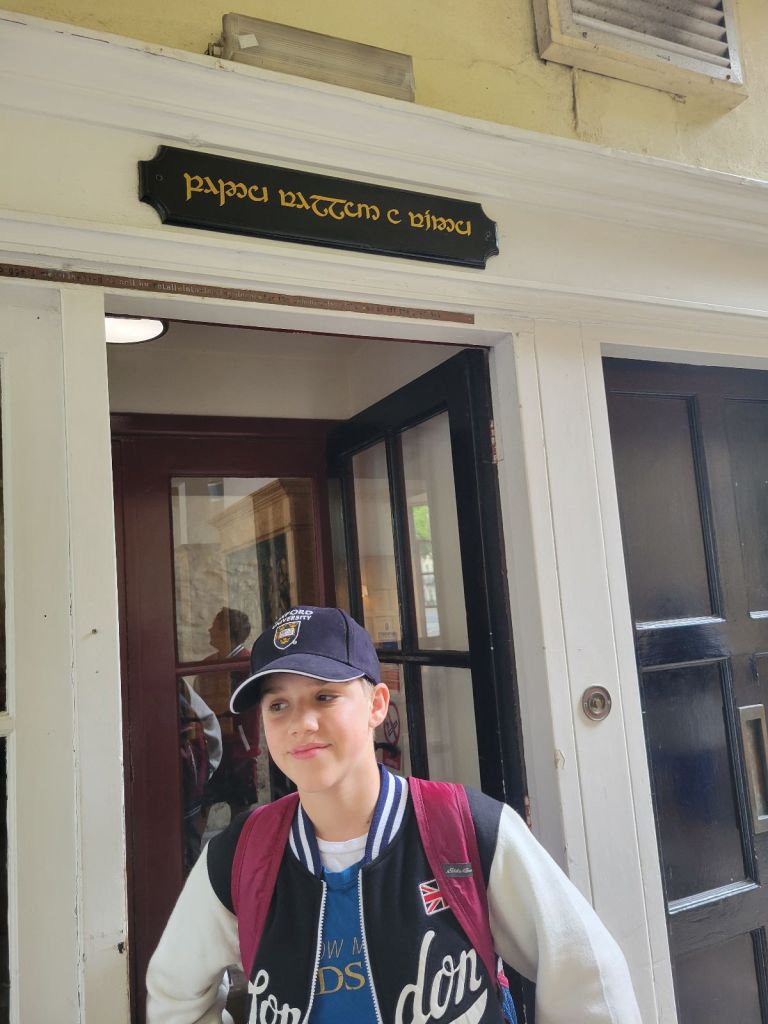
Hello, Everybody! I am writing this article from a cozy Airbnb in Oxford. Yes, the University Oxford! I was early this day walking around the town. I stopped and ate at Lamb and Flag. The Lamb was a frequented pub of the Inklings. It looks nice on outside and there is even an Elvish sign above the entrance. Also, around the back of the pub is an ancient looking path and an even older looking tree, but there in the path stands a lamppost…a Narnian lamppost perhaps.

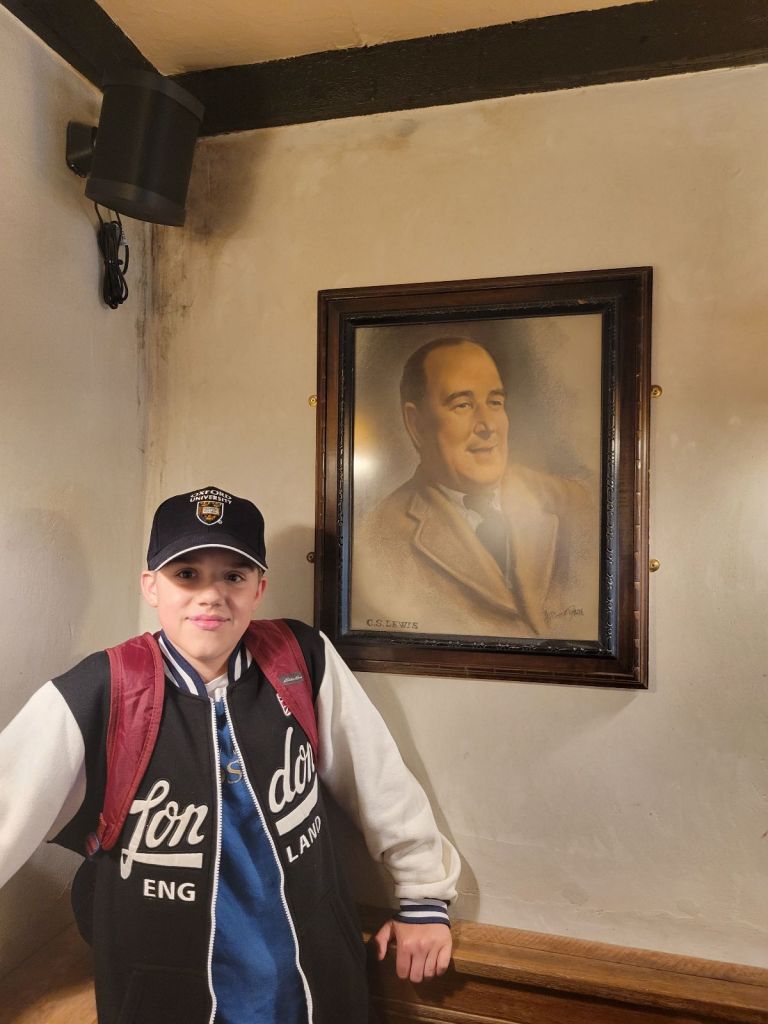
Upon entering, I found the building to be larger than I expected. I then notice the Tudor style rooms inside. Then I found a nice side room. I think it was the Inkling room. Why did I come to that assumption you may ask? Because there were two pictures adorning the wall. One was a photograph of the renowned J.R.R. Tolkien and his wife. The second an illustration of the famed C.S. Lewis.

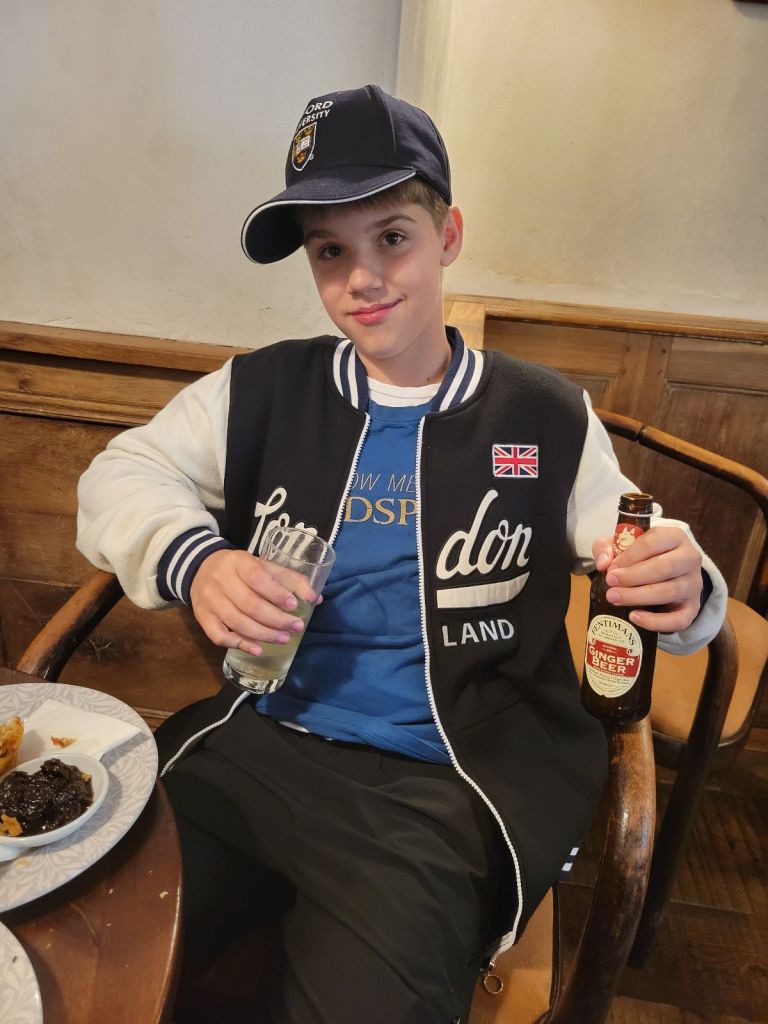
For a drink I had a decent Ginger Beer. For food, they do not sell warm food, so I had a cheese and ham croissant and a sausage roll.

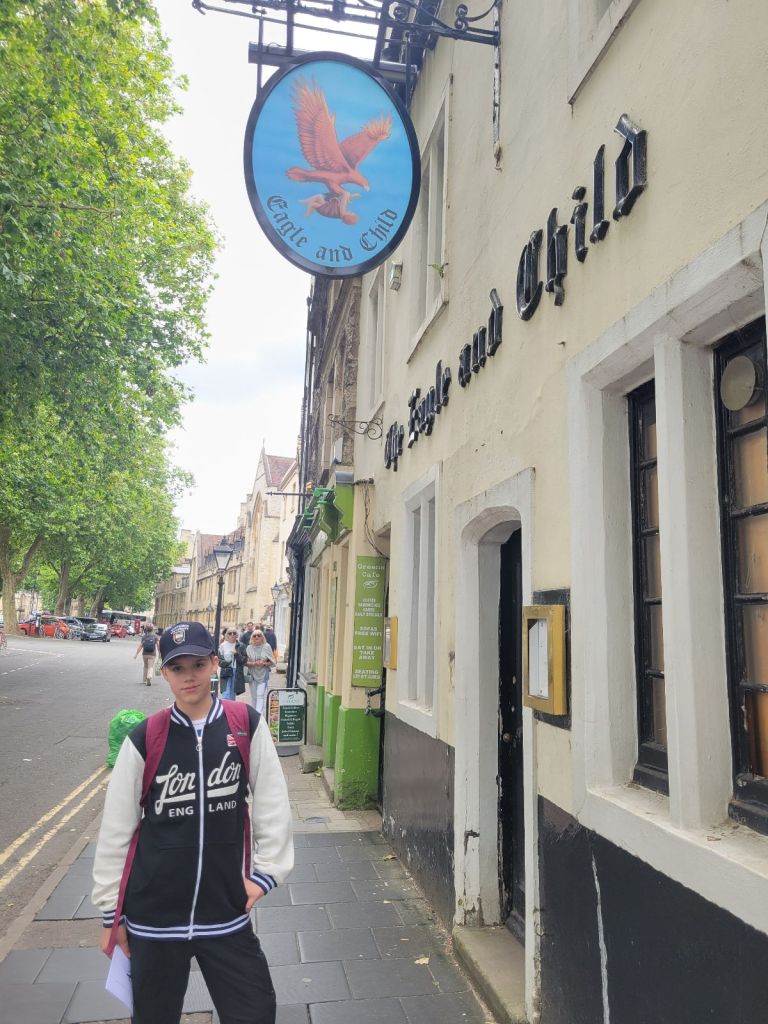
The Eagle and Child was closed, which was a disappointment, but it was still fun to see such an iconic and influential pub in the lives of Tolkien and Lewis and all the other Inklings!

-A.L.Spears

A Coin Flip, A Science Fiction Wager

One day in the 1900s two men sat discussing late into the night, they sat around a table in the pub The Eagle and the Child. These two men were J.R.R. Tolkien and his best friend C.S. Lewis. These two Inklings were discussing and debating over the concepts of space travel and time travel. How would it work? What would it be like? Back and forth they went. They were unsatisfied with the stories of space and time travel that they were reading. So they flipped a coin. Lewis got space travel and Tolkien end up with time travel. And so they set out to craft there stories.

Lewis was a rapid writer and soon an entire trilogy came from this wager. The trilogy is known as The Space Trilogy or the Ransom Cycle. The first book was Out of the Silent Planet, the next Perelandra, and finally This Hideous Strength. The story tells of how a man visited different planets in the solar system governed by celestial beings. Each planet he visits has a different Genesis theme, and his goal is to stop a Satan-like villain from his evil schemes.

Tolkien on the other hand was slow and tedious writer. Of his time travel tale he only made four chapters. These four chapters can be found in The lost Road one of the twelve histories of Middle-earth. His story tells of a father and son being reembodied in different eras, starting with Edwin and Elwin in the modern age. They resurface again as Eadwin and Aelfwine from Anglo-Saxon legend, and then Aubidoin and Alboin from Lombardic. The time travel stretches all the way back to Tolkien;s Numenorian characters, Amandil and Elendil.

He said of his tale, “I began an abortive book of time-travel of which the end was to be the presence of my hero in the drowning of Atlantis. This was to be called Numenor, the land in the west. The thread was to be the occurrence time and again in human families (like Durin among the dwarves) of a father and son called by names that could be interpreted as Bliss-friend and Elf-friend.”

Since Tolkien never completed his work. he did not publish it but his son Christopher would later publish the fragment. It can be found in The Lost Road and other writings. It is the fifth book in the history of Middle-Earth series.

C.S. Lewis and J.R.R. Tolkien were both great writers, changing the genres of fantasy, Christian life, and science fiction together.

The Inklings Themselves

Who exactly were the Inklings?

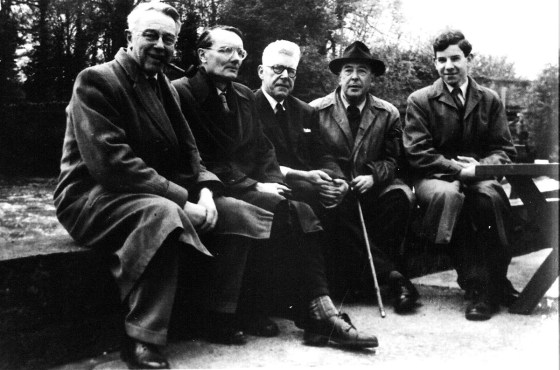
They were a literary group or club in Oxford, England. They frequented two Oxford pubs: The Eagle and the Child, and The Lamb and Flag. There were twelve regular members and frequent attendees of the Inklings.

J.R.R. Tolkien, possibly the most famous Inkling, was born in Bloemfontein, South Africa in 1892. He moved to England at a young age after his father died. He studied at Exeter College, Oxford. He served in World War One and became a professor of Anglo-Saxon at Oxford. He published The Hobbit in 1937 and The Lord of the Rings in 1954. He was a devout Catholic. He died in 1973 at the age of eighty-one years old.

C.S. Lewis, also possibly the most famous Inkling, was born in 1898 in Belfast, Ireland. He changed his name from Clive Staples to Jack. His mother died when he was nine. He served in World War One, and after the war worked at Oxford and Cambridge University. After World War Two, he wrote many books such as The Chronicles of Narnia, The Screwtape Letters, The Space Trilogy, and Mere Christianity. He died of kidney failure at the age of sixty-four.

Charles Williams was born in London in 1886. He went to school at St. Alban’s, and he worked at Oxford University Press. He published and wrote many things like poetry, theology, drama, history, biography, and book reviews. He lived too far from Oxford to be a regular member of the Inklings at first, but after he moved there he became a regular member. He died in 1945.

Owen Barfield was born in London. He went to school at Highgate and attend Wadham College, Oxford. He had a degree in English language and literature. He was an author and a poet and was a founding father of a new spiritual movement. Barfield was known as “the first and last Inkling,” founding the club and living the longest. In fact, C.S. Lewis dedicated The Lion, the Witch, and the Wardrobe to his daughter, Lucy Barfield. Owen Barfield died in 1997 at the age of ninety-nine.

Henry Victor Dyson Dyson was born in 1896. He was commonly referred to as Hugo Dyson. He was an expert in Shakespeare, but he was not a very active writer himself. Together, he and Tolkien converted C.S. Lewis to Christianity. He died at the age of seventy-nine in 1975.

Christopher Tolkien, the son of J.R.R. Tolkien, was born in Leeds, England. He was ever the little editor of his father Tolkien’s works from a very young age, criticizing the book if was not consistent. During World War Two, he served in South Africa as a British air force pilot. After the war, he attended Trinity College, Oxford. He was invited by his father to become a member of the Inklings. After his father’s death, he was the owner of the Tolkien estate and the editor of all Tolkien’s left behind works.

Warren Lewis, C.S. Lewis’ brother, was born in 1895 in Belfast, Ireland. For his career, he was an army officer and Irish historian. He fought in both the World Wars. He published several history books. Warnie was sadly an alcoholic and died at the age of seventy-seven in 1973 at Oxford.

Adam Fox was born in 1883. He was the headmaster of Radley College for some time. In fact, he was one of the very first Inklings. He wrote an enormous poem across four volumes titled, “Old King Cole.” He attempted to greatly promote Plato among the classics. He met his end in 1977.

Dr. Robert Emlyn Havard was the doctor of C.S. Lewis, Lewis’ wife, and Tolkien. He wrote the appendix for C.S. Lewis’ book, The Problem of Pain. Like Tolkien, he was a devout Catholic. One day when he was late to the meeting, Warnie Lewis referred to him as “the useless quack.” Following this, his nickname became “the U.Q.” On another day, Hugo Dyson called Havard “Humphrey” as he could not recall his first name. From that point on, the others called him Dr. Humphrey. He died in 1985.

Lord David Cecil, another Inkling member, was born in 1902 in England. He developed his love for reading because of a medical operation that made him stay in bed for a long time. He studied Christ College, Oxford. His first book was The Stricken Deer in 1929. He then worked on writings about Walter Scott and Jane Austen. Mostly working in Oxford as a professor, he joined the Inklings and eventually died in 1986 at the age of eighty-three.

Nevill Coghill was born in 1899. He was a director of drama and an Anglo-Irish scholar. He studied at Exeter College. He also made a modern version The Canterbury Tales and of Shakespeare’s works. He died in 1980.

Jack A.W. Bennett was born in Auckland, New Zealand. He studied at the University of Auckland, and sometime after this, he moved to Oxford and studied and taught there. He was the best known scholar of Middle English and was a fellow of C.S. Lewis. He died in 1980.

Now you will never forget the Inklings and how they have influenced our world today.

The Life of C.S. Lewis

Who is C.S. Lewis? Today we will examine together who the man behind the Chronicles of Narnia truly is.

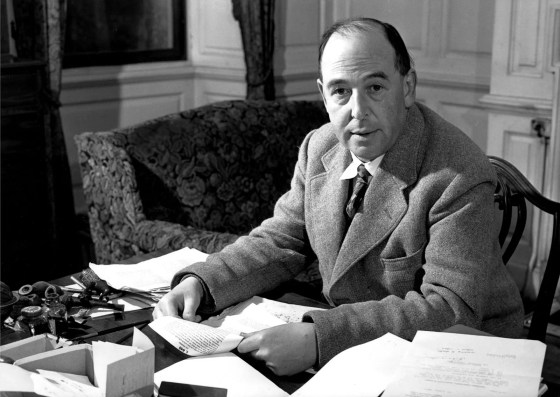
C.S. Lewis was born November 29, 1898 in Belfast, Ireland. His father was a lawyer and his mother was a mathematician who taught Lewis and his brother Warnie. Lewis’ full name was Clive Staples Lewis. As a kid, he did not like this horrid name, so he changed it to Jack. His mother died of cancer when he was nine years of age. His father sent him to a boarding school. His father was very demanding and did not understand how to raise children, and the brothers did not like their dad’s parenting skills. After his mother died, Jack left the true faith of Christianity.

Later, Jack studied under a tutor, the same one that his brother and father had studied under. He learned to read the classics in Greek and Latin. He was also greatly inspired by George MacDonald. He was studying for the Oxford exam, but he failed. He tried again and failed. Then he went off to serve in World War One. The experience influenced him greatly. He had a traumatizing time.

After the war, Oxford let soldiers enroll for many former students had died. Jack became a scholar and then a teacher at Oxford. He made friends with J.R.R. Tolkien and a club of writers called the Inklings that included Tolkien and Hugo Dyson. He reconverted to Christianity with the help of Tolkien and Dyson and they had a deep friendship.

After his conversion, World War Two overtook Europe. A few of the Inklings joined the war effort, and some of the younger Inklings enlisted as soldiers. Christopher Tolkien, the son of J.R.R. Tolkien, was one of these. Lewis met another great friend and Inkling, Charles Williams, during this time.

During and after the war, Lewis wrote many books including The Screwtape Letters, The Chronicles of Narnia, and The Space Trilogy. He took a position as professor at Cambridge since Oxford would not promote him. He married Joy Davidson in his fifties. A few years later, Joy got cancer and died. Lewis was greatly grieved and wrote a book on his sorrow. He died of kidney failure one week before his sixty-fifth birthday.

C.S. Lewis, or Jack, was a famous scholar, author, theologian, and Inkling.

Food In the Hobbit

In The Hobbit food is abundant, from hobbit larders to troll caves. The hobbit society is based around food and drink as much as fellowship, and trolls bond over food as well. Other havens within The Hobbit, such as Beorn’s home, are also. marked by abundant food. Every culture in Middle Earth depends on food, but none more than the hobbits.

The hobbits cherish food like no other race, as demonstrated by Bilbo. Food is more than a life need. It is the fuel of their very society. It brings them together at the table, multiple times a day as they engage in the mannerly ritual of eating.

Trolls, on the other hand, are far less polite with their eating habits. Trolls generally eater whatever they can get. In The Hobbit, the three trolls that we encounter are having a supper of mutton (sheep meat). But trolls find man flesh the most delicious. In the story, they took a very long time to decide how to cook their food once they had caught it. The appetite of a troll is humongous.

Another humongous eater of Middle-earth was Beorn. Beorn is regarded as a good cook and host. Beorn collects most of his food, like milk and honey, from his animals. Beorn’s honey cakes are famous in Wilderland and loved by many. But Beorn seldom gives them to travelers.

Food throughout Middle-earth is cherished and loved, and hobbits, trolls, and Beorn all used food in their own way. The hobbits enjoyed cozy meals with tea and sharing conversation, the trolls scavenged for whatever they could find, and Beorn’s relationship with his animals provided bountiful food whenever it was needed. In every world, food should bring fellowship and friendship.

-A.L. SPEARS