The Inklings Themselves

Who exactly were the Inklings?

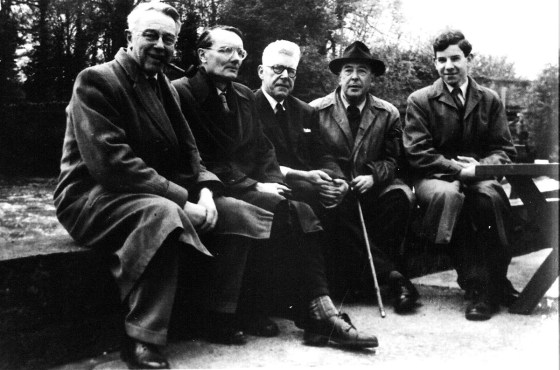
They were a literary group or club in Oxford, England. They frequented two Oxford pubs: The Eagle and the Child, and The Lamb and Flag. There were twelve regular members and frequent attendees of the Inklings.

J.R.R. Tolkien, possibly the most famous Inkling, was born in Bloemfontein, South Africa in 1892. He moved to England at a young age after his father died. He studied at Exeter College, Oxford. He served in World War One and became a professor of Anglo-Saxon at Oxford. He published The Hobbit in 1937 and The Lord of the Rings in 1954. He was a devout Catholic. He died in 1973 at the age of eighty-one years old.

C.S. Lewis, also possibly the most famous Inkling, was born in 1898 in Belfast, Ireland. He changed his name from Clive Staples to Jack. His mother died when he was nine. He served in World War One, and after the war worked at Oxford and Cambridge University. After World War Two, he wrote many books such as The Chronicles of Narnia, The Screwtape Letters, The Space Trilogy, and Mere Christianity. He died of kidney failure at the age of sixty-four.

Charles Williams was born in London in 1886. He went to school at St. Alban’s, and he worked at Oxford University Press. He published and wrote many things like poetry, theology, drama, history, biography, and book reviews. He lived too far from Oxford to be a regular member of the Inklings at first, but after he moved there he became a regular member. He died in 1945.

Owen Barfield was born in London. He went to school at Highgate and attend Wadham College, Oxford. He had a degree in English language and literature. He was an author and a poet and was a founding father of a new spiritual movement. Barfield was known as “the first and last Inkling,” founding the club and living the longest. In fact, C.S. Lewis dedicated The Lion, the Witch, and the Wardrobe to his daughter, Lucy Barfield. Owen Barfield died in 1997 at the age of ninety-nine.

Henry Victor Dyson Dyson was born in 1896. He was commonly referred to as Hugo Dyson. He was an expert in Shakespeare, but he was not a very active writer himself. Together, he and Tolkien converted C.S. Lewis to Christianity. He died at the age of seventy-nine in 1975.

Christopher Tolkien, the son of J.R.R. Tolkien, was born in Leeds, England. He was ever the little editor of his father Tolkien’s works from a very young age, criticizing the book if was not consistent. During World War Two, he served in South Africa as a British air force pilot. After the war, he attended Trinity College, Oxford. He was invited by his father to become a member of the Inklings. After his father’s death, he was the owner of the Tolkien estate and the editor of all Tolkien’s left behind works.

Warren Lewis, C.S. Lewis’ brother, was born in 1895 in Belfast, Ireland. For his career, he was an army officer and Irish historian. He fought in both the World Wars. He published several history books. Warnie was sadly an alcoholic and died at the age of seventy-seven in 1973 at Oxford.

Adam Fox was born in 1883. He was the headmaster of Radley College for some time. In fact, he was one of the very first Inklings. He wrote an enormous poem across four volumes titled, “Old King Cole.” He attempted to greatly promote Plato among the classics. He met his end in 1977.

Dr. Robert Emlyn Havard was the doctor of C.S. Lewis, Lewis’ wife, and Tolkien. He wrote the appendix for C.S. Lewis’ book, The Problem of Pain. Like Tolkien, he was a devout Catholic. One day when he was late to the meeting, Warnie Lewis referred to him as “the useless quack.” Following this, his nickname became “the U.Q.” On another day, Hugo Dyson called Havard “Humphrey” as he could not recall his first name. From that point on, the others called him Dr. Humphrey. He died in 1985.

Lord David Cecil, another Inkling member, was born in 1902 in England. He developed his love for reading because of a medical operation that made him stay in bed for a long time. He studied Christ College, Oxford. His first book was The Stricken Deer in 1929. He then worked on writings about Walter Scott and Jane Austen. Mostly working in Oxford as a professor, he joined the Inklings and eventually died in 1986 at the age of eighty-three.

Nevill Coghill was born in 1899. He was a director of drama and an Anglo-Irish scholar. He studied at Exeter College. He also made a modern version The Canterbury Tales and of Shakespeare’s works. He died in 1980.

Jack A.W. Bennett was born in Auckland, New Zealand. He studied at the University of Auckland, and sometime after this, he moved to Oxford and studied and taught there. He was the best known scholar of Middle English and was a fellow of C.S. Lewis. He died in 1980.

Now you will never forget the Inklings and how they have influenced our world today.
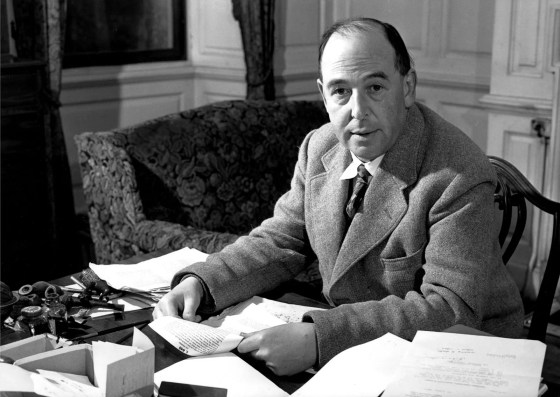
The Life of C.S. Lewis

Who is C.S. Lewis? Today we will examine together who the man behind the Chronicles of Narnia truly is.

C.S. Lewis was born November 29, 1898 in Belfast, Ireland. His father was a lawyer and his mother was a mathematician who taught Lewis and his brother Warnie. Lewis’ full name was Clive Staples Lewis. As a kid, he did not like this horrid name, so he changed it to Jack. His mother died of cancer when he was nine years of age. His father sent him to a boarding school. His father was very demanding and did not understand how to raise children, and the brothers did not like their dad’s parenting skills. After his mother died, Jack left the true faith of Christianity.

Later, Jack studied under a tutor, the same one that his brother and father had studied under. He learned to read the classics in Greek and Latin. He was also greatly inspired by George MacDonald. He was studying for the Oxford exam, but he failed. He tried again and failed. Then he went off to serve in World War One. The experience influenced him greatly. He had a traumatizing time.

After the war, Oxford let soldiers enroll for many former students had died. Jack became a scholar and then a teacher at Oxford. He made friends with J.R.R. Tolkien and a club of writers called the Inklings that included Tolkien and Hugo Dyson. He reconverted to Christianity with the help of Tolkien and Dyson and they had a deep friendship.

After his conversion, World War Two overtook Europe. A few of the Inklings joined the war effort, and some of the younger Inklings enlisted as soldiers. Christopher Tolkien, the son of J.R.R. Tolkien, was one of these. Lewis met another great friend and Inkling, Charles Williams, during this time.

During and after the war, Lewis wrote many books including The Screwtape Letters, The Chronicles of Narnia, and The Space Trilogy. He took a position as professor at Cambridge since Oxford would not promote him. He married Joy Davidson in his fifties. A few years later, Joy got cancer and died. Lewis was greatly grieved and wrote a book on his sorrow. He died of kidney failure one week before his sixty-fifth birthday.

C.S. Lewis, or Jack, was a famous scholar, author, theologian, and Inkling.

REVIEW of The Screwtape Letters By C.S. Lewis

The Screwtape Letters by C.S. Lewis is a really funny read and is a really odd book altogether.

The setting of the story is in the 20th century England. And in a way Hell because Screwtape is in hell writing the letters.

One of the many characters that are featured in the book is Screwtape. He is a demon secretary, adviser, and mentor. He is quite the boaster of his tempting days. Another Character is the Jr. tempter Wormwood. He writes to his uncle Screwtape to inform him of his progress of the Patient and his attempts to tempt which mostly end poorly. The Patient is a Human Like me and you. he lives in England and goes about his life unbeknownst to the Demons behind the scenes. Some of the other people mentioned by Screwtape is Our Father Below who is Satan. and the Enemy who is the true God.

The Plot of the story is about the designs of Screwtape and Wormwood trying to deceive the Patient. And the blundering mistakes that Wormwood makes again and again until he looses the Patient to the Enemy.

The Theme of the Screwtape letters is to show us a new and different perspective on life and tell us how to live in a more Godly way.

Any C.S. Lewis fans would enjoy and find helpful the Screwtape letters.

-A.L. Spears

Greek Mythology in Narnia

The Chronicles of Narnia by C.S. Lewis were greatly influenced by the myths of classical Greece. The fauns, dryads, and Bacchus all appear in Lewis’ tales alongside Aslan and the Pevensie children.

Mr. Tumnus, the faun from The Lion, the Witch, and the Wardrobe, and all other Narnian fauns were inspired by Greek fauns and Pan the demigod. Both Narnian fauns and Greek fauns all share the same appearance, being half-man and half-goat. The upper half is a man’s body with goat horns sprouting from the head. The lower half is goat legs and hooves. Mr. Tumnus has a wooden flute just like Pan’s, yet another similarity between the two.

Another Greek inspiration are the nymphs and dryads. For those who do not know, the nymphs are Greek water spirits, and the dryads are Greek tree spirits. The Narnian nymphs and dryads are very similar to the Greek ones and appear throughout the Chronicles. Virtually everything is alive in Narnia, from talking animals to tree and river spirits.

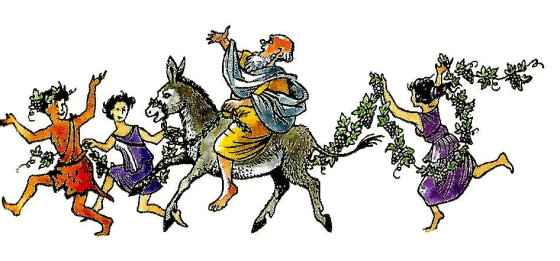
Along with demigods and nymphs, one of the Greek gods himself makes an appearance in the books. In Prince Caspian, it describes a wild feast where a man riding a donkey “who was old and enormously fat” is passing out refreshments. The refreshments consist of wine and grapes. The man, who we later learn is Bacchus, is surrounded by wild dancing girls. Bacchus is Dionysius, the son of Zeus, the god of wine and revelry.

As seen above, the Greek myths greatly inspired the Chronicles of Narnia, and the books would not be the same without them.

Tolkien’s Middle-Earth Inspirations

Many of you have read The Lord of the Rings, or at least watched the movies. (If you haven’t, then what’s wrong with you?!) But not everyone is familiar with the ways Middle-earth was inspired and created. Today I will tell you about the three main inspirations for Tolkien’s work: his language experience, the mythologies of early cultures, and the Bible. All of the information comes from books written by J.R.R. Tolkien and works about Tolkien by David Day. 

J.R.R. Tolkien wrote in one of his letters: “The invention of languages is the foundation. The ‘stories’ were made rather to provide a world for the languages than the reverse. To me a name comes first and the story follows.” 

Many modern fantasy writers make languages for their books but very few make books for their language. Tolkien was ever a linguist. He learned Latin as a boy. He was fascinated with Gothic, Old English, French, etc. He started to make up languages such as Nevbosh, which looked similar to Old English. He worked on his first prototype of Elvish in his late teens. When he got into Oxford, he studied to become a linguist. Later, he got a job as Professor of Anglo-Saxon. Near the end of his life, he received awards for The Hobbit and The Lord of the Rings, but the award he loved most of all was the one Oxford gave him for his linguistic pursuits. This award was not about his works, but it was about him, and his pursuit of language knowledge.

Tolkien’s linguistic learning provided inspiration for his books set in Middle Earth. There are over a dozen languages in the world of The Lord of the Rings. The common tongue, or Westron, is similar to our language English. Rohirric, the language of the Riders of Rohan, is similar to Anglo-Saxon, the language that Tolkien taught at Oxford.      

Tolkien has several different kinds of Elvish dialects for the high elves, the gray elves, and the silvan elves. Quenya is used for the high elves and is reserved for important, ceremonial moments. The grammar of Quenya is inspired by Latin and Greek and the vocabulary is similar to the Finnish language. Sindarin is the everyday Elven language. It is similar to Welsh and other Celtic languages. 

In Mordor, the Black Speech is used. This language is similar to ancient Mesopotamian languages. Tolkien designed it to sound rough and harsh. 

As you can see, Tolkien’s world was greatly inspired by the languages he studied and loved. From Anglo-Saxon, to Latin, to Celtic, to Mesopotamian, the languages of our world influenced the world of Middle-Earth. But these languages had myths and stories that go along with them.

Tolkien was also inspired by many European mythologies and legends. He incorporated elements from Greco-Roman myths, Norse mythology, and the tales of Arthur, Charlemagne, and Sigurd. 

The Greco-Roman myths inspired many things from Middle-earth such as the Valor. For those who do not know , the Valor are the gods with a lowercase “g”. Manwe, lord of eagles and ruler of the Valor is like Zeus, king of the gods. Ulmo, the lord of waters, is similar to Poseidon. And Aule, the smith and maker of the dwarves, is like the blacksmith god Hephaestus. Mandos, god of the dead and the doomsman of the Valor, is equivalent to  Hades, the Greco-Roman god of the underworld (although Mandos is a good version of Hades, not evil).

Besides the myths of Greece and Rome, Tolkien was also inspired by Norse or Viking mythologies. The name middle-earth itself came from Norse old English and Germanic. Also the forest of Mirkwood comes from a Norse word that I dare not pronounce. Mirkwood of Norse mythology was a dark and pathless forest. Many characters and creatures of Middle-earth originated in Norse tales and stories such as trolls, wargs, dwarves, elves, barrow-wights.

The stories of three great courts of the Middle Ages inspired Tolkien: the story of King Arthur and his knights, of King Charlemagne and his peers, and of Sigurd. For those of you who do not know who Sigurd is, he is a hero from the Volsunga Saga. Many people compare Aragorn and Gandalf to Arthur and Merlin, which is not wrong, but one also can and should compare Aragorn and Gandalf to Charlemagne and Turpin, and to Sigurd and Odin. The old mentor figures of Merlin, Turpin, and Odin share wisdom like Gandalf with the young hero. 

Aragorn, Arthur, Charlemagne, and Sigurd all bear magical swords forged long ago. Aragorn’s sword Narsil or Anduril was forged by Telchar, the dwarven smith of the first age. Arthur’s sword Excalibur was made in the legendary land of Avalon. Charlemagne’s sword Joyeuse [joy-ooze] was made by Wayland the Smith who also made many other famous swords. Sigurd’s sword Gram, which formerly belonged to Odin,  was also forged by Wayland. Tolkien connects his hero Aragorn with these legendary heroes by giving him a blade forged by a legendary smith from long ago.

Another major inspiration was the epic Beowulf. The original manuscript of Beowulf barely survived a fire in the library. But in the part where the thief is stealing the cup from the dragon, the page is burned. It never says who the thief was or why he stole the cup. In The Hobbit, Bilbo steals a cup from Smaug the dragon, and then Smaug takes out his anger on the lake men who are much like Beowulf. The Hobbit is Tolkien’s theory of the thief.

Tolkien was inspired by all the heroes and mythologies of Europe, but by none more than the true mythology of the Bible.              

Tolkien was influenced most of all by the Word of God. As stated before, the Valor are gods with the little ‘g’ but there is a being who is God with a big ‘G.’ His name is Eru, the One. Tolkien wanted his story to be like the mythologies that he loved, but he also wanted his world to be like the true story found in the Christian Bible. So he incorporated both.

Tolkien gives the elves their own Fall. After the lights of the world were destroyed, the elves rebelled against the Valar leading to exile and death.

Gandalf is one of the many little Christs of middle-earth. He departs from the fellowship and battles the Balrog (aka a Demon of darkness) for three days and then returns to the living as Gandalf the White to finish his task that Eru gave him to defeat Sauron.

Another little Christ figure is Frodo who carries the ring. This heavy burden is not his responsibility, but he shoulders it anyway, possibly a symbol of Christ bearing our sins. 

Yet another Christ figure is Aragorn. He is both a healer and a long-awaited king. His coming is prophesied in the poems of Middle-earth, just as Christ’s coming as king was foretold by the prophets of the Old Testament.

As you can see, Tolkien was inspired by many things to create his wonderful masterpiece that we cherish today. Some of his greatest inspirations were languages, mythology, and Scripture. Knowing about Tolkien’s inspirations furthers your enjoyment of his books and the movies based on them. 

Just like Tolkien, we can work hard at pursuing our own interests in school and in life. We can appreciate different aspects of history, literature, languages, and God’s creation, even if we don’t know how we will use these things at the time. Having a wide variety of interests will form who we are as people, and the more we understand of God’s world, the better we can create our own worlds, whether they be in books, art, music, movies, or games. 

So, the next time you read The Lord of the Rings, look for the hidden inspirations that make it so extraordinary, and get inspired to learn all you can so you can make your own world like Tolkien did.  – A.L.Spears

Food In the Hobbit

In The Hobbit food is abundant, from hobbit larders to troll caves. The hobbit society is based around food and drink as much as fellowship, and trolls bond over food as well. Other havens within The Hobbit, such as Beorn’s home, are also. marked by abundant food. Every culture in Middle Earth depends on food, but none more than the hobbits.

The hobbits cherish food like no other race, as demonstrated by Bilbo. Food is more than a life need. It is the fuel of their very society. It brings them together at the table, multiple times a day as they engage in the mannerly ritual of eating.

Trolls, on the other hand, are far less polite with their eating habits. Trolls generally eater whatever they can get. In The Hobbit, the three trolls that we encounter are having a supper of mutton (sheep meat). But trolls find man flesh the most delicious. In the story, they took a very long time to decide how to cook their food once they had caught it. The appetite of a troll is humongous.

Another humongous eater of Middle-earth was Beorn. Beorn is regarded as a good cook and host. Beorn collects most of his food, like milk and honey, from his animals. Beorn’s honey cakes are famous in Wilderland and loved by many. But Beorn seldom gives them to travelers.

Food throughout Middle-earth is cherished and loved, and hobbits, trolls, and Beorn all used food in their own way. The hobbits enjoyed cozy meals with tea and sharing conversation, the trolls scavenged for whatever they could find, and Beorn’s relationship with his animals provided bountiful food whenever it was needed. In every world, food should bring fellowship and friendship.

-A.L. SPEARS

SEASON REVIEW of Amazon Rings of Power (Season 1)

OVERVIEW OF PLOT

The plot of Season One of the Rings of Power was very intricate—too intricate, in my opinion. The story thread of Galadriel is her looking for revenge for her brother on Sauron. But also, apparently, she mentioned in a later episode that Celeborn (her husband) was missing…which seems like it should have been mentioned in episode 1. The story thread of Elrond was his friendship with Durin and his faithfulness to his friend and his people. The story thread of Bronwyn and Theo and Arondir was to protect the Southlands from Adar and the orcs. The story thread of the Harfoots, which is my least favorite, was to befriend the “stranger,” who seems to be some kind of wizard (hopefully blue, not gray). The story thread in Numenor showed Queen Miriel returning to the faithful of Numenor and helping Galadriel against Sauron and Adar. Meanwhile, Elendil was mourning the death of his wife, trying to find the best place for his kids, and trying to navigate the politics of Numenor. In the end, he fully commits to the faithful.

FAVORITE CHARACTERS & EVENTS

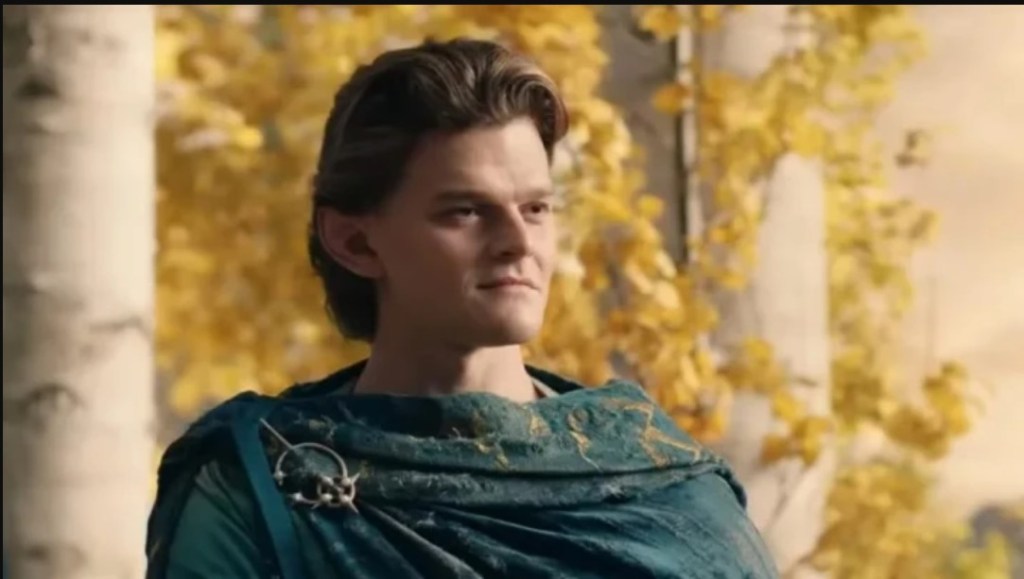
 My favorite character was Elrond half-elven, herald of Gilgalad. His friendship with Durin seemed one of the most “Tolkien” relationships (if you know what i mean?). His outfits I like a lot; the blue fit his character well. 

Elendil was a close second for favorite characters. He was noble and protective of his family. I would love to see the relationship between him and Isildur grow and see how it will develop before Elendil dies and Isildur takes the one ring as a payment for his brother and father.    

One of my favorite events was in Episode 2 when the scene fades out to the map of Middle Earth and the dwarven music starts playing–and you see Celebrimbor and Elrond going to see Durin. It was a very dramatic scene with the music and visuals. 

Another favorite event was when Halbrand gives the idea of using another alloy to combine with the mithril to make the elven rings. Then he says, “Consider it a gift.” Which is a very Sauron thing to say since in the books, he was disguised as Annatar, the “lord of gifts.” Even though they did not use that name, possibly because they did not have rights to it, this little comment is a clever way to hint at the name to anybody who knows the Silmarillion. It was like putting a sign on Halbrand’s forehead saying, “I am Sauron.”  

LEAST FAVORITE CHARACTERS & EVENTS

My least favorite character was Nori, or to give her full name, Elanor Brandyfoot. My first point of dislike, which not many have discussed, was that the name Nori is a name of a dwarf from the company of Thorin Oakenshield. To use this name for a hobbit seems odd. Hobbits, I will say again and again, do not appear in Tolkien’s second age, so they should not be in the Rings of Power second age. 

My second least favorite character was Galadriel. The actor was good, but Galadriel’s story went downhill. Her character was completely ruined because she was always fight-y, fight-y, fight-y. Yes, in the Silmarillion she wanted to leave Valinor to establish great realms for the elves, but she doesn’t fight at all in the book. Jumping off of a boat near Valinor and swimming to Middle Earth was like swimming across an ocean–not possible, even for a great elf. It was also inconsistent, because when Galadriel was trapped in Numenor, she could have tried to swim to Middle Earth if she was such a great swimmer.

My least favorite event in the first season was the big battle in the Southlands. It was quite bloody and every time somebody got hit, apparently it was a major artery and blood started shooting out everywhere. When Bronwyn was shot, she needed to die, but she kept staying alive somehow. The reason she needed to die is because there are only THREE love stories between men and elves: Beren and Luthien, Tuor and Idril, and Aragorn and Arwen. Having Bronwyn and Arondir as a love story completely destroys the pattern. The one good feature about this battle was how cool Mount Doom looked before it popped its top. But when the volcano erupted and ash was coming towards the town, a lightning bolt came out of nowhere, which was confusing.

HOPES AND FEARS

My hope, along with many others, is that the stranger (“Meteor Man”) ends up being revealed as…not Radagast…not Gandalf…not Saruman…but one of the BLUE WIZARDS! If he is a blue wizard, my hope is that the second one will also show up. Another hope is that they bring Isildur’s brother Anarion into the series. He is one of my favorite characters in the book–but I have a lot of those. Another, probably futile hope, is that the Harfoots will get destroyed by Sauron and that Arondir and Bronwyn will not survive. 

My hope for Isildur is that he will somehow in someway make an oath with the Southlanders, but when it is time for the Southlanders to fulfill their oath they will not answer—making them prime candidates for the ghostly wraiths in the Paths of Dead. This would depth to Aragorn’s story as the heir of Isildur summons the dead to fulfill their oath.

One of the flaws I’ve noticed (something I may have mentioned in an episode review) is that Elrond is supposed to marry Galadriel’s DAUGHTER. How is that going to work out? I’m afraid they’ll have to change the story or do a weird, awkward time jump. Another thing to worry about is that I just heard a week ago that the Adar actor quit the show–he was very good. What are they going to do? I don’t like when movies or shows change actors after you get used to one person playing a character.

COMPARISON WITH ORIGINAL SOURCE MATERIAL

First off, Galadriel I give a two out of ten for faithfulness to the original source material. As I already mentioned, she is too fight-y, and her arrogance makes her a different person than the one in the book. Elrond I give a nine out of ten. The Durin plot was an add-on to the original story, but it felt like it fit with the original story (since in the books the dwarves of Khazad Dum rush out to save Elrond when he is fighting Sauron and about to be destroyed…which hints there could a friendship between Elrond and Durin). 

Arondir, Bronwyn, Theo, Nori, and the Stranger all get a zero out of ten. Even if the Stranger turns out to be a Blue Wizard, he doesn’t come to Middle Earth from a flying meteor in the book. Gilgalad I was really disappointed in. He barely came into the story, and his character doesn’t seem like the Gilgalad we know in the books. His attitude wasn’t open with Elrond, instead of being like a father to him as he was in the books. Gilgalad will have to become a much stronger character if he is to join Elendil in fighting Sauron in the last alliance.

Elendil gets a…I don’t know what I would give him. Elendil’s character was a good one, but he didn’t get much dialogue or attention in the show. There was barely anything to work off of to decide if he will be true to the original, especially this early in the Numenorean timeline. We should find out how good Elendil really is in the show when Ar-Pharazon takes over and launches an attack on Valinor. 

OVERALL ASSESSMENT

The first season of The Rings of Power introduced you to lots of characters. It did not track with much lore besides the forging of the rings…and that was kind of “off” since they didn’t forge all the rings they were supposed to before Sauron left. The music was excellent. The story, not so good. Some of the story threads were interesting, and some were boring or ridiculous. Despite this, I will definitely watch the next season because it wasn’t a total failure and it’s not like there are better Tolkien shows out there…

There is also hope. If you despised this show, there is an animated show coming out in 2024 about the Rohirrim and Helm Hammerhand whom Helm’s Deep is named after. It is narrated by Miranda Otto, the actor who played Eowyn in the trilogy. 

REVIEW of Amazon Rings of Power, Season 1, Episode 3

Rings of Power Episode 3, titled “Adar,” was a lot more gruesome and had a lot more tragic scenes, including the fight with the warg and the tavern brawl.

Scattered and alone after the first dark lord has fallen, the orcs are trying to rebuild without being eradicated by elves and men. The practical orcs were really fun to watch, especially because of the way they had to hide from the sun while making the slaves work. They look much better than the orcs in The Hobbit movies which uses CGI to make orcs. The orcs in Rings of Power are much scarier because the actors seem to do better without a green screen and the full costumes are more realistic.

Hallbrand, the man on the raft in episode 2, was thrown in jail in episode 3 for stealing a smith’s crest. His fight with the smith and other Numenoreans was one of the more gruesome scenes. I hope that soon, somehow, Isildur frees or aids Hallbrand, and in the process an oath is made. Next, Hallbrand should travel to Middle Earth and attempt to unite the southlands under one banner. but he will be defeated and retreat to the white mountains (the future Paths of the Dead) with the rest of his people. When Isildur eventually founds Gondor, he should call Hallbrand to his aid, invoking his faith to defeat Sauron. But Hallbrand has already lost many people and is afraid of a massive defeat. He will deny the summons, thus becoming the king of ghosts in the Paths of the Dead that Aragorn will later summon in The Lord of the Rings. This is all speculation on my part, but I want Hallbrand to be this character.

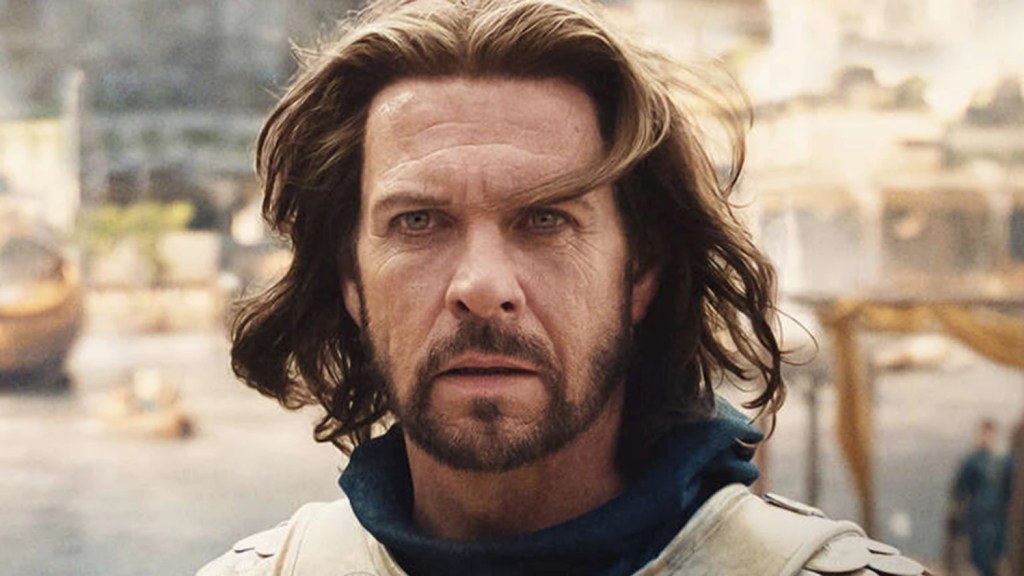
Numenor was extraordinary to look at. The music was not as good as the dwarven theme, but still outstanding. In Numenor, in the Silmarillion, the scepter falls to Miriel after her father’s death (in the show, he does not seem to be dead). Pharazon forces Miriel to become his wife even though they are cousins so he can take over the kingship of Numenor. In the show, he still appears to be chancellor. Hopefully, queen regent Miriel is undercover as one of the faithful. The “faithful” were the remnant of the Numenoreans who stayed faithful to the elves and the Valar (the gods of Middle Earth). The Numenorean character I appreciated the most was Isildur’s father, Elendil. Future high king of Gondor and Arnor, Elendil was played wonderfully by Lloyd Owens. He is right up there with Elrond, half-elven, in my opinion..

Since we’re on the topic of Elrond, there were no scenes featuring him in this episode, or any of the elves of Linden or the dwarves, for that matter. Since this is one of the story lines I most care for, I was disappointed to see that it wasn’t expanded upon. I want to see more of the friendship between Elrond and Durin.

The Harfoots in this episode were worse than they had been in the other episodes. They did not expand on the Stranger story line (the most interesting thing about the Harfoots), and their time on the screen took away from the epic story of Numenor.

In closing, an interesting line from this episode is when the orcs mention that Adar, their leader, is searching for a weapon. I think this is Theo’s blade. Adar is most likely Sauron in disguise. In The Silmarillion, the name Sauron deceives elves and men with is “Annatar,” lord of gifts. Adar…Annatar…see the connection?

I rate this episode a 3.5 out of 5 stars (or 5 out of 7 palantiri, if you prefer). What did you think of this episode, and what are you most looking forward to in the next episodes? Leave a comment.

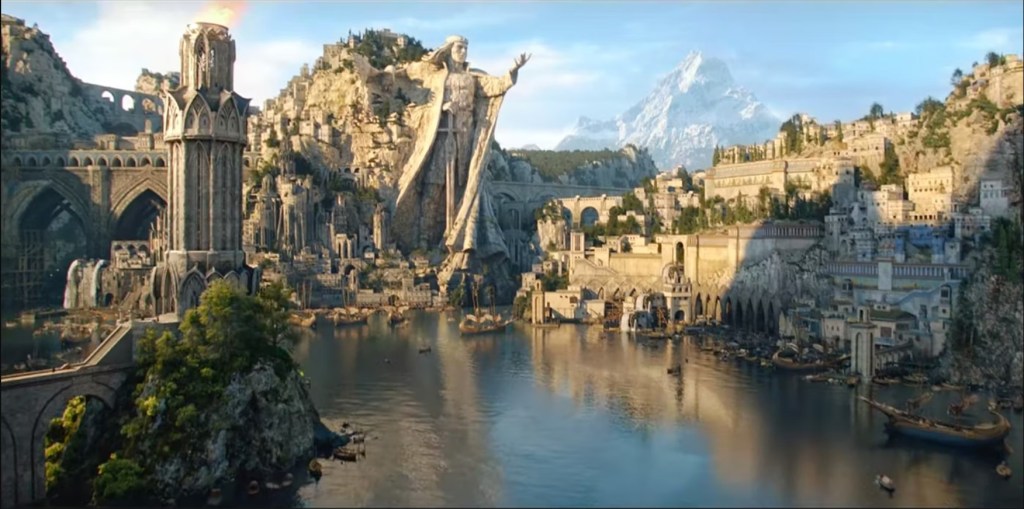
Amazon’s Numenor from Rings of Power

REVIEW of Amazon Rings of Power, Season 1, Episode 2

Rings of Power Episode 2 was interesting, easy to watch, and enjoyable. The music continued to be outstanding, especially the Dwarven theme. There were a few hidden treasures of Tolkien lore. It had many more intense and creepy scenes than Episode 1. I rate it a 4.5 out of 5. Beware that if you read on, there may be some spoilers for Episode 2.

One of the hidden treasures of Tolkien lore was the fish dragon. A fish dragon is a special breed of dragon living in the sea that Tolkien wrote about in a volume of The History of Middle Earth: The Lost Road and Other Writings. In the show, it was impressive and very serpent-like. I encourage you to call this catastrophic sea creature a “fish dragon” and not a “sea serpent” as that is its proper name.

In the first episode, Sauron looked amazing when we glimpsed him in one scene–he looked similar to the Sauron from the Peter Jackson films but different enough to hint at his cunning and deceitful personality in the second age. But this is not the form he will have for the whole show. In the Silmarillion, Sauron disguises himself as Annatar, “lord of gifts,” to deceive elves and men. He appears to Celebrimbor, forger of the rings of power, and deceives the elf into teaching him the techniques that will lead to the One Ring. With Annatar being a disguised Sauron, we have no idea who Sauron will end up being in this show. It could be Meteor Man (the stranger from the sky), it could be Halbrand (the man on the raft with Galadriel), or it could even be one of the Harfoots. Uh, probably not.

My favorite scenes from Episode 2 were the Dwarven sets with the breathtaking imagery of Khazad-Dum in its former glory. For those who don’t know (my mom), Khazad-Dum would be abandoned to a balrog and later earn the name of Moria, which means “black chasm” in Tolkien’s invented language. In the show we see the splendid halls, windows, and greenery inside the mountain.

The creepiest scenes surround Bronwyn, the healer from Episode 1. When she returns home, her son Theo is hiding in a cupboard from an orc who came from catacombs under their house. She decides to have some mother-son bonding time and stays behind with Theo to defeat the orc. The orc was famished because after Morgoth’s defeat, the orcs had been scattered around Middle Earth until Morgoth’s lieutenant Sauron took his place. I liked the way the orc was very afraid of the sun and had a bone and leather helmet and armor to cover its skin from the sun. This is very important because later in the Third Age, Saruman would breed the Uruk-hai to be not affected by the sun and able to raid more freely.

I still didn’t enjoy the Harfoots much, but they haven’t intruded yet into the main story, so we will have to wait to see how it unfolds.

In the upcoming episodes, I am most looking forward to seeing Numenor in its splendor and glory. At the end of Episode 2, a Numenorean ship, most likely carrying Elendil, rescues Halbrand and Galadriel who are stranded at sea. Elendil is the man who would later flee from Numenor when it sinks into the sea (Tolkien’s Atlantis legend), and his descendants would be the kings and queens of Gondor and Arnor. Eventually, the line would lead to Aragorn who would reunite those separated kingdoms.

What are you most looking forward to in the next episodes? Leave a comment.

Amazon’s Numenor from Rings of Power

REVIEW of Amazon Rings of Power, Season 1, Episode 1

The Rings of Power TV show details the history of the second age of Tolkien’s mythology. Episode 1 did a satisfactory job with the plot. Sadly, I cannot describe the show’s plot if I am planning to keep no spoilers in this review.

The music was outstanding. Howard Shore, the composer for most of the music in the Peter Jackson trilogy, composed many songs for the Amazon show which made everything feel more and more like Middle Earth.

The visuals were absolutely stunning, particularly with the lighting and the landscape scenes. We got to see most of the important locations such as Linden, the southlands, and the vales of Anduin. It felt right for the world of Middle Earth. It probably helped that they filmed it in New Zealand.

The costumes were amazing. Gil-galad’s laurel wreath matched with the Linden landscape. Elrond’s blue was perfect for his character. Arondir’s Ent chest-plate was perfect for his elven character.

So far, Elrond is my favorite character. His attitude, his friendship with Galadriel, and his need to find out where he belongs in Elven society make him a perfect representation of what a young Elrond should be. The actor is a good fit for Elrond, half-Elven.

It is possible that Galadriel could be considered the main character, but we’re only on the first episode. Galadriel needs to have a much bigger character arc to become the character that we know her as in the third age. Right now she is: “Battle, battle, battle–kill Sauron!” Like Gil-galad says, sometimes the wind that tries to blow out the fire can make the fire bigger. Galadriel is risking the lives of elves in her lust for revenge. In the Silmarillion, Galadriel spends much time with Melian, queen of Doriath, having some calm time. But in the show, it looks like she stayed with her brother through the battles of the first age, making her a rage monster.

My least favorite part of the show are the dirty, grimy, un-lore-true Harfoots. They remind me of “Radagast” from the Hobbit movies with their unkemptness and hair situation. None of the Harfoot characters are truly Middle Earthian.

All in all, I would rate Rings of Power, Episode 1 nine of ten “hobbit holes,” four out of five “wizards,” a half of the one ring, or for you normal folks, 4.5 stars out of 5.